Mail : info@bobparkinsconsultants.com Call Us : (916) 806-6580

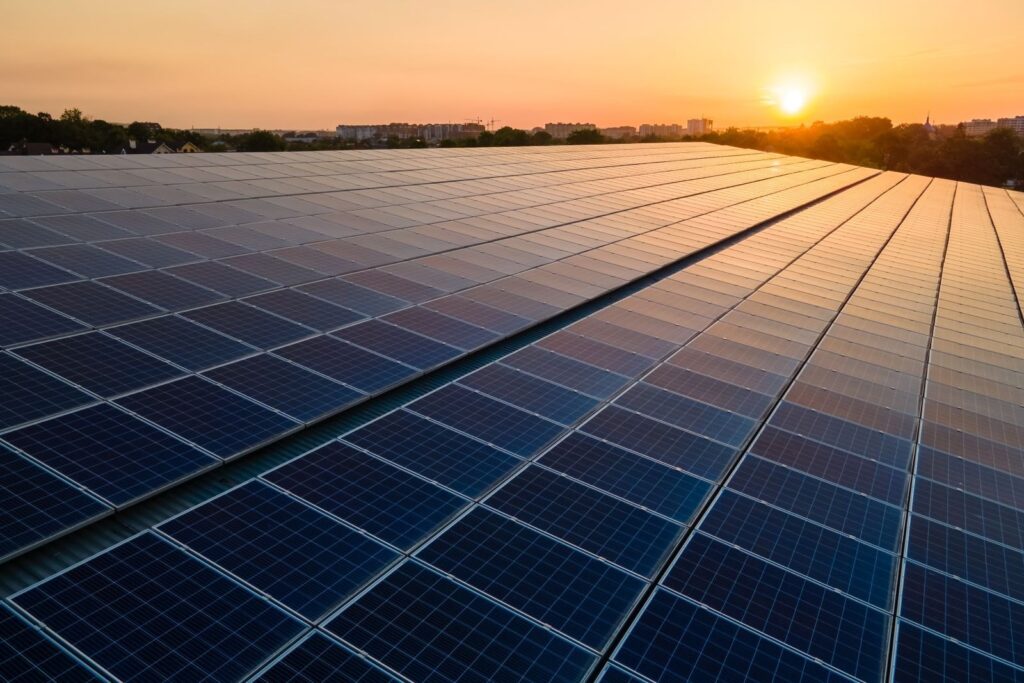
The U.S.A. seems to be the ideal location for large-scale solar development—there is an abundance of solar radiation, there is a robust national transmission grid to distribute the power, there are many nearby load centers, and the U.S.A. is an entrepreneurial nation. What seems to be a perfect location actually can be an exceptionally difficult one. We will discover why. A large-scale system using double axis trackers to ma-vinüze energy generation. Changes due to environmental restrictions: The trackers neve elevated h’ith dirt mounds and concrete piers to avoidfloodpotential; the construction cycle u•as shortened because ofendangered species. an independent solar consultant, I am often asked by foreign and U.S. Inanciers and companies to help them evaluate land and develop it for large -scale solar projects of 1 MW or larger. The primary purpose is to sell the generation to electric utilities, which are mandated to generate and buy more renewable energy. The U.S.A. seems to be the ideal location for large scale solar development and eager solar champions envision a modern day Gold Rush—and why not? There is an abundance of solar radiation, there is a robust national transmission grid to distribute the power, there are many nearby load centers, and the U.S.A. is an entrepreneurial nation. Enthusiasm soon turns to frustration, however. What seems to be the perfect location actually can be an exceptionally difficult one, where only the ‘brave dare venture’. The origins of this paradox are many, but four prime candidates are government regulations, environmental restrictions, a transmission grid that was not built with disbursed and sporadic renewable energy in mind, and difficulty finding a buyer. Government Regulations
There are over 30,000 ‘govemments’, each with regulat01Y and policing authority in the U.S.A. Every location has multiple government agencies with some kind ofjurisdiction They may include Fedelül, state, county, and city agencies or special governing districv
with specific interests, like fire protection. During the initial planning phase for a solar project, it is necessary to secure control of the land via ownership or a leasing arrangement and coordinate the proper zoning with the local planning department. Unless the site is already approved for solar, this process will require environmental studies, which may evolve into additional detailed studies. Local county and city agencies control the use of land via zoning requirements, even if the land is privately owned, and the conduct of construction through building permits and inspections.
A persistent and nagging problem is that there are no uniformly applied national technical standards to guide project design and construction. There is the National Electric Code (NEC), a nonbinding indust1Y standard which is updated every three years. But every local planning department and permit office is like a quasi nation state—they can choose to adopt the NEC or ignore parts or all of it. Consequently, projects that may be approved in one jurisdiction may be rejected or modified in a neighboring jurisdiction.
I have experienced two burdensome problems with local agencies. First, most do not have experience with solar projects, so they do not have coherent policies and procedures. They may scramble to get advice from other agencies, but the advice may be inadequate and produce poor results. Occasionally, they may be receptive to technical suggestions from the solar developer. Because these agencies are uninformed and unprepared, uncertainty often prevails.
Second, even if agencies have policies and standards, they often do not uniformly interpret and enforce them. Most solar contactors have stories about an official inspector accepting work on one day and another inspector demanding changes the next day. This inconsistency contributes to chaos. A successful solar developer will assure that he coordinates with local authorities early and often to minimize these risks.
Environmental Restrictions
As already mentioned under regulations, unless a large solar project has been determined to be an approved use for a specific location or is otherwise compatible, it will require detailed environmental studies to get the proper zoning and/or conditional use permit. More complex sites may require additional detailed studies, which can take about 1 1/2 years or more to complete and cost in the ‘six figures’ (I have experienced studies costing USS350,OOO to USS500,OOO). The ideal environmental study result would be a finding of no adverse impacts. Otherwise the project could be denied, the scope could be changed, or a ‘mitigation’ fee could be