Mail : info@bobparkinsconsultants.com Call Us : (916) 806-6580

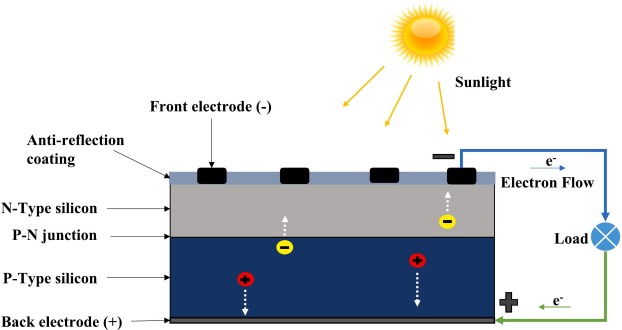
Renewable and “green” energy, such as electric generation from solar photovoltaic (PV) systems, are hot topics today. Public policy discussions revolve around energy policies, Renewable Portfolio Standards, tax incentives, and subsidies. But from a business owner’s perspective, the decision to “Go Solar” is usually an economic decision – does a commercial solar project make economic sense and how does one determine if it is worth investigating further? We will examine a simple site specific test.
Typical Economic Evaluation Process
First of all, let’s examine how to evaluate PV system economics. Standard practice for designers is to first select a system capacity and configuration suitable for the specific site conditions. Using local weather data, the designer then estimates how much solar energy will be generated as a function of the month of the year and the hour of the day. By applying the appropriate utility rates, he can then determine the value of the displaced utility energy or energy savings. Many utilities have Time of Use or TOU rates, which are higher during “peak” times. Typically, peak times occur during the summer months from about 12:00 PM to the early evening. Coincidentally, this corresponds to the times when PV systems generate their maximum energy. With this data the designer can then develop spreadsheets to summarize the value of the energy savings vs. PV system costs over the system’s economic lifespan. Since peak TOU rates are always higher than the average annual rates, a good strategy to maximize the benefits relative to the investment is to first size a PV system to “shave off” or reduce the expensive peak energy. If done correctly, this will reduce the owner’s utility costs and the costs to conduct business, an obvious competitive advantage.
A Simple Test of Solar Potential
But before going to this level of detail, there is a simple way to judge the solar potential of a specific site – by comparing local utility costs (Annual Average Utility Cost) with the solar system lifetime costs (Levelized Cost of Energy or LCOE). If the Average Annual Utility Costs exceed the solar LCOE, then a solar system has potential and it is worth investigating further. Let’s look at these variables in more detail.
Annual Average Utility Cost
A simple way to characterize the cost of utility energy is by the Annual Average Price per Kilowatt Hour by State, as reported by the U.S. Energy Information Administration(1). In 2010, the most current report, average state utility prices varied from a low of 6.2 cents per kilowatt hour (kWh) to 25.12 cents. The mean is about 8.75 cents and the national average is 9.83 cents. Many states in the East as well as California and Hawaii have average rates of about 12 cents or more. Of course, actual utility prices within a state may vary significantly. They depend on several factors, such as the generation technology (e.g. nuclear, hydropower, thermal, renewable), resource mix, capacity factor and its relation to the need for expensive market power, the fuel type (e.g. coal, natural gas), the age of generating plants, local environmental requirements like air pollution mitigation, greenhouse gas measures like carbon taxes or sequestration, and load growth. Also, a particular customer may have utility cost adjustments due to its power factor, load profile, or industry type and may include additional charges. Hence, judgment may be needed to adjust the average state prices for specific locations, particularly if the TOU rates are high. All in all, although the annual average utility price is an imprecise metric, it is a reasonable first step test.
Levelized Cost of Energy
The LCOE is a convenient means of quantifying the cost of generating energy in real dollars per kWh. It includes the costs to build, operate, and maintain a generating plant over an assumed financial life span. Cost inputs include the initial capital costs, fuel costs, fixed and variable operations and maintenance (O&M) costs, financing costs, and the capacity factor or the utilization rate in hours. A renewable technology like solar has no fuel costs and relatively minuscule O&M costs. On the other hand, thermal based technologies have significant fuel and O&M costs, but lower relative capital costs per kW. Tax incentives and rebates can reduce the LCOE even more.
The U.S. Energy Information Administration (USEIA) reports (2) that based on 2011 data, the average U.S. LCOE for solar PV generating systems with no incentives or targeted tax credits and a capacity factor of 25% is about 14.4 cents per kWh. Assuming that existing incentives can reduce this by about 25%, the adjusted cost to generate PV energy is about 10.8 cents per kWh. The reported LCOE for a conventional utility natural gas fired combustion system at 30% capacity (peaking plant) is about 13 cents while utility coal fired technologies at 87% capacity (base load) range from about 10 cents to 13.5 cents. Solar PV generation definitely is becoming competitive with these utility energy generation sources.
Conclusion
As a first evaluation criterion, any state or location with an average utility cost per kWh in the 10 cent range is a good candidate for a solar PV system. The next step would be to do a derailed evaluation considering specific site conditions and weather to derive a more precise evaluation. Clearly, locations with no renewable energy incentives and average annual utility rates in the low single digits are not ready for solar, at least not yet. However, considering that solar system costs have reduced significantly in the last two to three years, that could easily change. A good strategy to account for changes is to perform this simple assessment regularly. If in doubt, get a qualified solar consultant.
(1) “Electric Sales, Revenue, and Average Price Report”, http://www.eia.gov/electricity_revenue_price/index.cfm.
(2) http://www.eia.gov/forecasts/aeo/er/index.cfm.